Fisheries management
Antarctic ecosystem
Climate
Krill (Euphausia superba)
Dispersal and habitat preference of juvenile emperor penguins —implications for conservation management
Summary
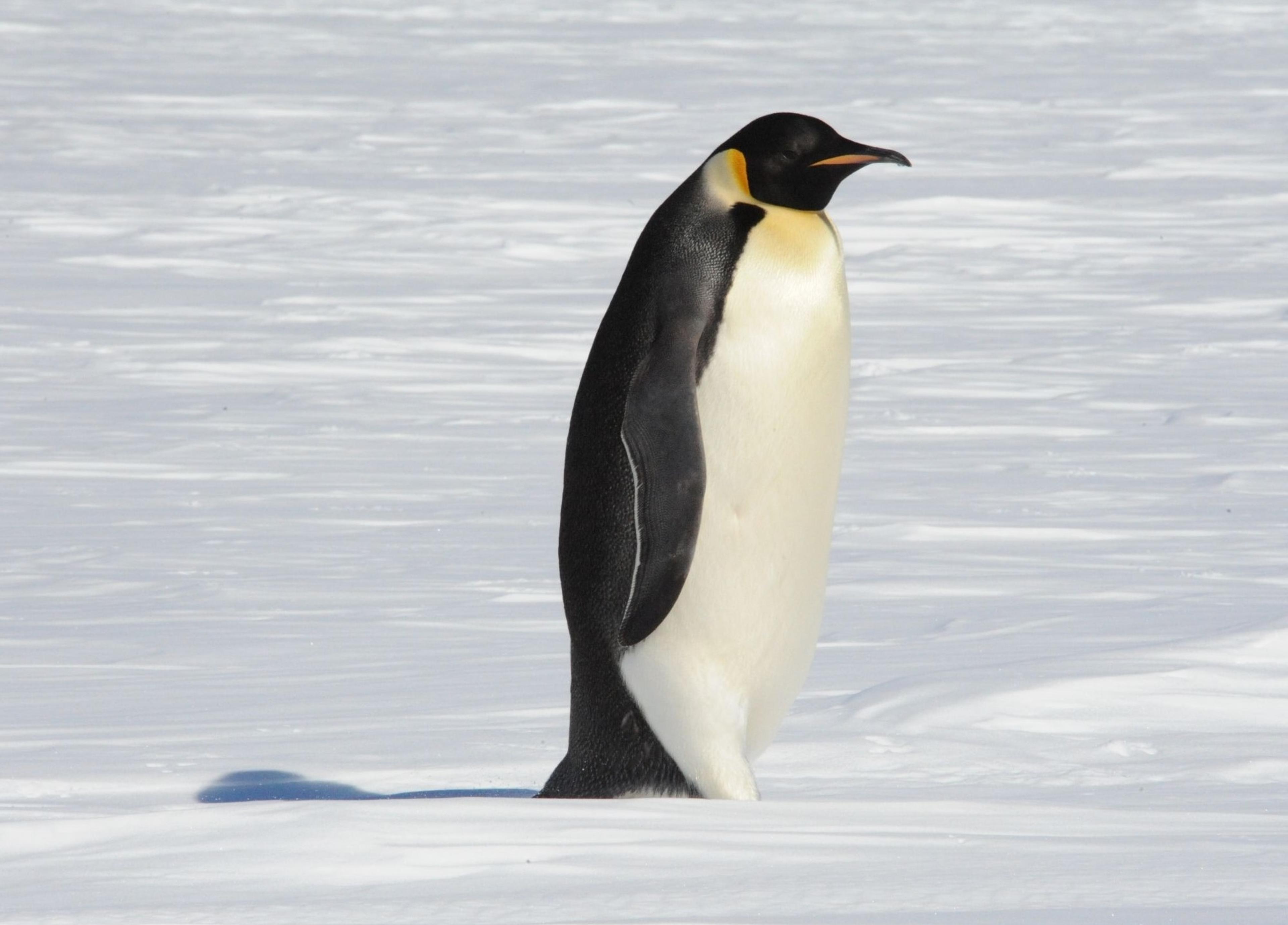
This study tracked nine juvenile emperor penguins fitted with satellite transmitters at the Atka Bay colony in western Dronning Maud Land, Antarctica, during the austral summer of 2016/2017. The fledglings migrated northward over 1,800 km to the northern extents of CCAMLR subareas 48.4 and 48.6, reaching as far as 52° S and spanning 63° of longitude. After a brief period at their northernmost positions, all individuals made a synchronous southward return to the marginal ice zone (MIZ) between mid-April and mid-May. The MIZ appears to represent critical feeding habitat for juvenile emperor penguins. The study found that current and proposed marine protected areas (MPAs) in the Southern Ocean do not adequately cover the MIZ year-round, and that juvenile penguins were excluded from the proposed Weddell Sea MPA for over four months. The authors recommend dynamic, spatio-temporal management approaches to better protect these young penguins during their vulnerable first trip to sea.
Key Findings
1
Juvenile emperor penguins migrated over 1,800 km north from Atka Bay, reaching 52° S and spanning 63° of longitude2
All individuals showed broadly synchronous movement: northward migration followed by rapid southward return to the marginal ice zone (MIZ) between mid-April and mid-May3
The MIZ represents a potentially critical feeding habitat for juvenile emperor penguins, with birds switching to area-restricted searching behaviour upon arrival4
Current and proposed MPAs do not adequately encompass the MIZ year-round; fledglings would have been excluded from the proposed Weddell Sea MPA for over four months5
Krill fishery in the southwest Atlantic is unlikely to pose a direct trophic threat to emperor penguins from Atka Bay based on current spatiotemporal footprint and quota levels6
Dynamic, spatio-temporal management mechanisms are recommended over static MPAs to protect juvenile emperor penguins and their habitatAbstract
Seabirds can disperse widely when searching for prey, particularly during nonbreeding periods. Conservation measures predominately focus on protecting breeding colonies, while spatial protection at sea is often based on knowledge of the distribution of breeding adults, despite accumulating evidence that marine habitats used by immature birds sometimes differ from those of adults. Juvenile emperor penguins from Atka Bay, west Dronning Maud Land, Antarctica, tracked immediately after fledging performed long migrations to the northern extents of the Convention for the Conservation of Antarctic Marine Living Resources subareas 48.4 and 48.6. Individuals did not remain long at their northern positions, before commencing a rapid southerly movement to within a few hundred km of the marginal ice zone (MIZ). The initial migratory movement was broadly synchronous across individuals. The southward movement and subsequent change to area-restricted searching were consistent with the MIZ representing a potentially important feeding habitat for juvenile emperor penguins. Spatio-temporal management mechanisms may be beneficial in reducing threats to these young penguins.Published in
Royal Society Open Science
2025Authors
Makhado A. B
Crawford R. J. M
Dyer B. M
Masotla M
Lowther A.
Institutions
Oceans and Coasts, Republic of South Africa Department of Forestry, Fisheries and the Environment, Cape Town, South Africa
FitzPatrick Institute of African Ornithology, DSI-NRF Centre of Excellence, University of Cape Town, Rondebosch, South Africa
Shanghai Ocean University College of Marine Living Resource Sciences and Management, Shanghai, China
• Research Department, Norwegian Polar Institute, Tromsoe, Norway
Methods
Data
Field
Read the full paper
Go to doi.org